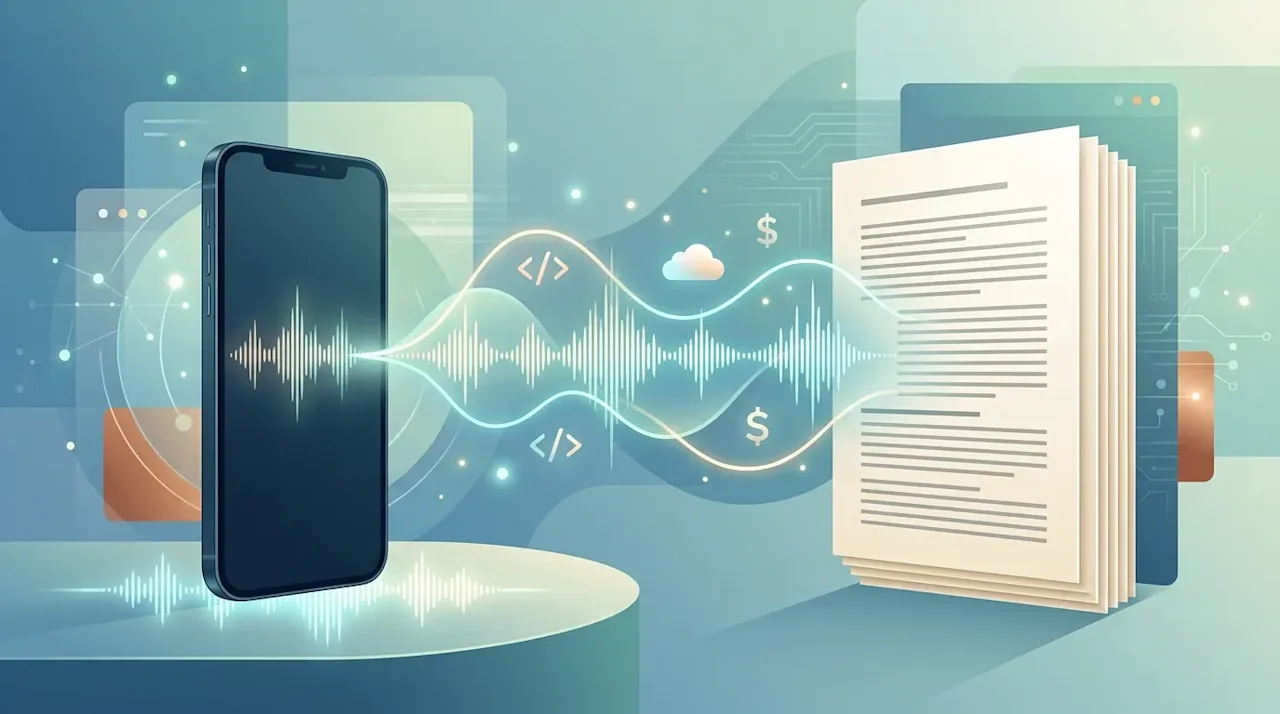
Most of what I dictate is in English, and not especially exotic English. Emails, messages, prompts for Claude, notes about whatever I'm building. Stock speech recognition handles most of it well, then trips on precisely the words I use most: model names, CLI commands, cloud services, prices, and the odd turn of phrase an Irish speaker brings with him to Jerusalem.
Fritter is my answer to that. It is a fine-tune of NVIDIA's Parakeet TDT 0.6B v2 on my own voice, for English dictation without code-switching. "Fritter" is the code name for the model line (I've taken to naming these after food, as the Hebrish models Jachnun and Sabich show), so later retrains keep the name and bump the version. This is v1.0.
Hugging Face Model danielrosehill/Fritter A personal speech-recognition fine-tune for English dictation without code-switching: tech vocabulary (model and product names, CLI and cloud terms), brand names, acronyms, numbers and currency in digits, Irish-English… ↓ 177Automatic speech recognitionCC-BY-NC-4.0Updated Oct 2026 View model on Hugging FaceHow it differs from my other models
My Hebrish models are about the Hebrew words that turn up in English speech here. Fritter deliberately leaves that out. It's for when I'm dictating plain English and want tech vocabulary, numbers and brand names to come out right. Boxty, the no-Hebrew sibling of the Hebrish models, covered similar ground. Fritter is my own model line, trained on the speaker takes in my read-aloud dataset that have no code-switching: 320 minutes of my voice, plus 10% LibriSpeech so it doesn't forget general English.
The numbers
On held-out test clips that were never used for training or for picking the checkpoint:
Tech-sentence word error rate drops from 7.53% (stock Parakeet v2) to 4.01%.
Hebrew-free English WER drops from 7.46% to 4.73%.
Recall of the target tech and English terms rises from 65.1% to 79.6%, and numbers from 33.9% to 50.0%.
There's a cost, and I'd rather be upfront about it. On LibriSpeech, which isn't my voice, it is slightly worse than stock (1.47% against 1.23%), and long-form dictation is about a point worse (12.16% against 11.05%). So Fritter is better at *my* dictation and roughly where stock is on everyone else's. The test sets are small too (319 clips for Hebrew-free English), so I'd treat differences under a point as noise.
Try it in the browser
The demo Space runs the int8 ONNX build on your own device, so the audio never leaves your machine:
It is tuned to one voice, accent and phone, so if you try it yourself you will probably see less of an improvement than I do.
Getting it
The .nemo checkpoint is on Hugging Face, along with GGUF builds (Q8_0 recommended, Q4_K_M and F16) for transcribe.cpp, which is what Offline Voice Input on Android and Handy on Linux use. The licence is CC-BY-NC-4.0, so it's free for personal, non-commercial use.
The training data comes from the same pipeline as everything else in this series. New words start as sentences written by the Contextual Sentence Creator, I read them aloud on my phone, and the next Fritter gets retrained on the takes.
Hugging Face Model danielrosehill/Contextual-Sentence-Creator A small model for one job. Given a term, a one-line context and a count n, it returns a JSON array of exactly n natural English sentences (6 to 18 words). Each sentence uses the term once, spelled as given, in the… Text generationAPACHE-2.0Updated Nov 2026 View model on Hugging Face