
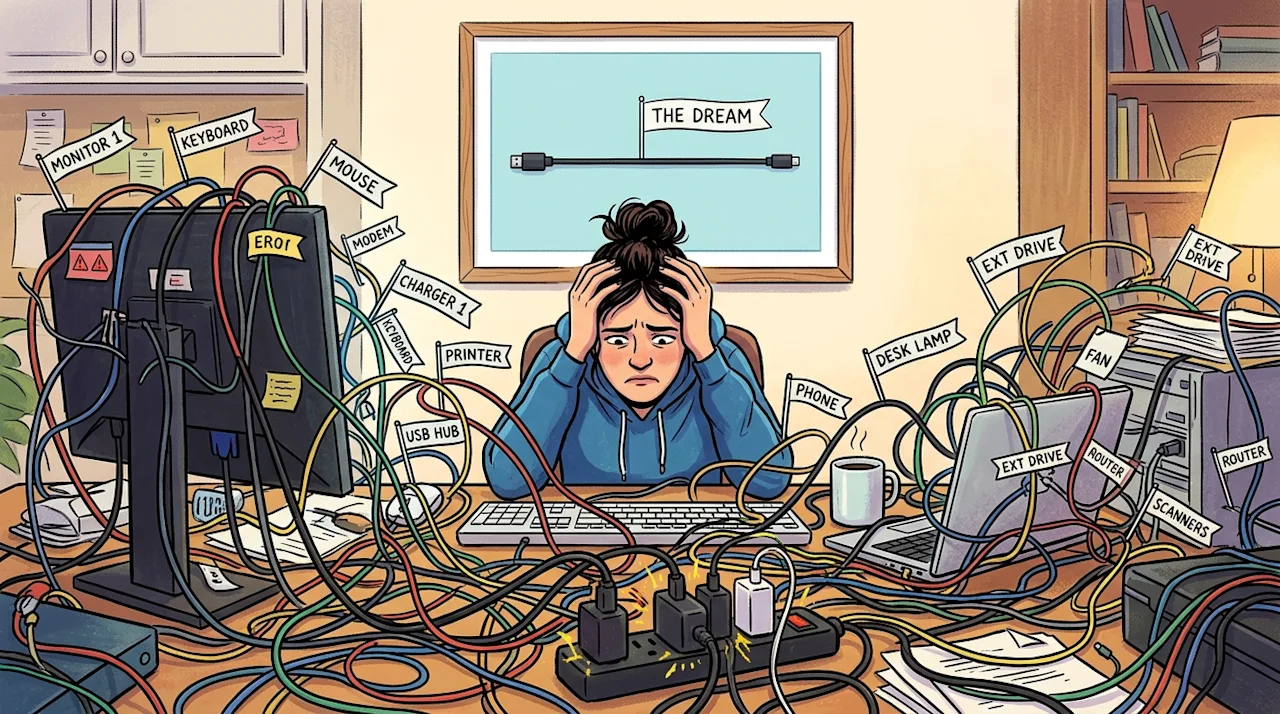
Anyone who's spent serious time with MCP — the Model Context Protocol that's supposed to be the universal standard for connecting AI assistants to external tools — knows that the technology is fantastic and the user experience is a catastrophe. I created a repository to gather my thoughts on this, and it ended up being part essay, part resource list, and part therapy session. The two biggest problems facing MCP right now are accessibility and fragmentation, and I think they're connected in ways that the current ecosystem isn't addressing.
danielrosehill/On-MCP-And-Consolidation View on GitHubThe accessibility cliff
When I try to explain MCP to my wife — who's a non-technical architect, very smart, absolutely not going to touch a JSON config file — the value proposition clicks immediately. AI assistants that can actually do things, not just chat? Obviously useful. She gets it in thirty seconds. But then comes the follow-up question: "How do I try it?" And every answer I have is terrible. Claude Desktop? Sure, but she prefers ChatGPT. Developer Mode? She's not a developer and doesn't want to pretend to be one. Install a local MCP server via npm? I might as well be speaking Klingon. The AI agent landscape is remarkably backend-heavy, and far too little attention goes into making these tools usable for the people who would benefit from them most. GUIs are a basic standard for what most people consider usable technology, and non-developers shouldn't need to wrestle with transport protocols and JSON configurations just to connect their AI assistant to their calendar.
But here's the thing: it's not just non-technical users who struggle. Even if you're perfectly comfortable installing local MCP servers and hand-editing credential files, you face a landscape of poorly maintained servers that break after updates, copycat MCPs of uncertain provenance raising legitimate security concerns, different tools demanding their own mcp.json files in different locations, and the fundamental usability problem that your MCP connections are fragmented across projects. I have one set of MCPs configured for Claude Code in my blog management repo, a different set for my personal automation projects, and yet another set globally. If I want to switch from writing code to saving a Netflix recommendation, I'm mentally juggling which MCPs are active and whether the right tools are available in my current context. This is not how normal humans want to interact with technology.
Consolidation as the path forward
I see two complementary approaches that could fix this, and the encouraging news is that people are already building both. The first is MCP gateways — intelligent routing layers that sit in front of multiple MCP servers and dynamically match requests from AI agents to the appropriate server. The killer feature here isn't just routing; it's context management. Right now, when you attach MCP servers to an AI assistant, all their tool definitions get loaded into the context window whether you need them or not. Attach ten servers and you've burned through a significant chunk of your context with tool definitions you won't use in this conversation. A smart gateway could feed tool definitions on demand, only exposing what's relevant to the current request, which saves context space and reduces confusion for the model.
The second approach is MCP connectors — think Zapier for MCPs — that consolidate multiple server connections into a single endpoint. My dream setup: a central MCP manager with both desktop and cloud UIs that lets me manage all my connections in one place, configure profiles with different credentials for the same service, organise servers into contextual groups that I can activate based on what I'm doing, and abstract away all the JSON plumbing that currently makes this ecosystem hostile to anyone who isn't already comfortable in a terminal. The repository includes a curated list of projects working on these problems, from Microsoft's MCP gateway to MetaMCP to Smithery.ai. The space is moving fast, which gives me hope that the current pain is temporary rather than permanent.
